Welcome to my A2 media blog. My name is Gavin Fraser (0245). I am part of Group 1 along with Alice Cahill (0130), Kayvon Nabijou (0610) and Mahalia John (0345).
You can navigate my blog using the right hand side column where you will find: Some information about me My post labels including 'A2 Production', 'A2 Prelim' and 'A2 Research and Planning' A live link to The Latymer School Music Video Blog The blog archive of all my posts
Thank you for taking the time to look at my blog.
Music Video
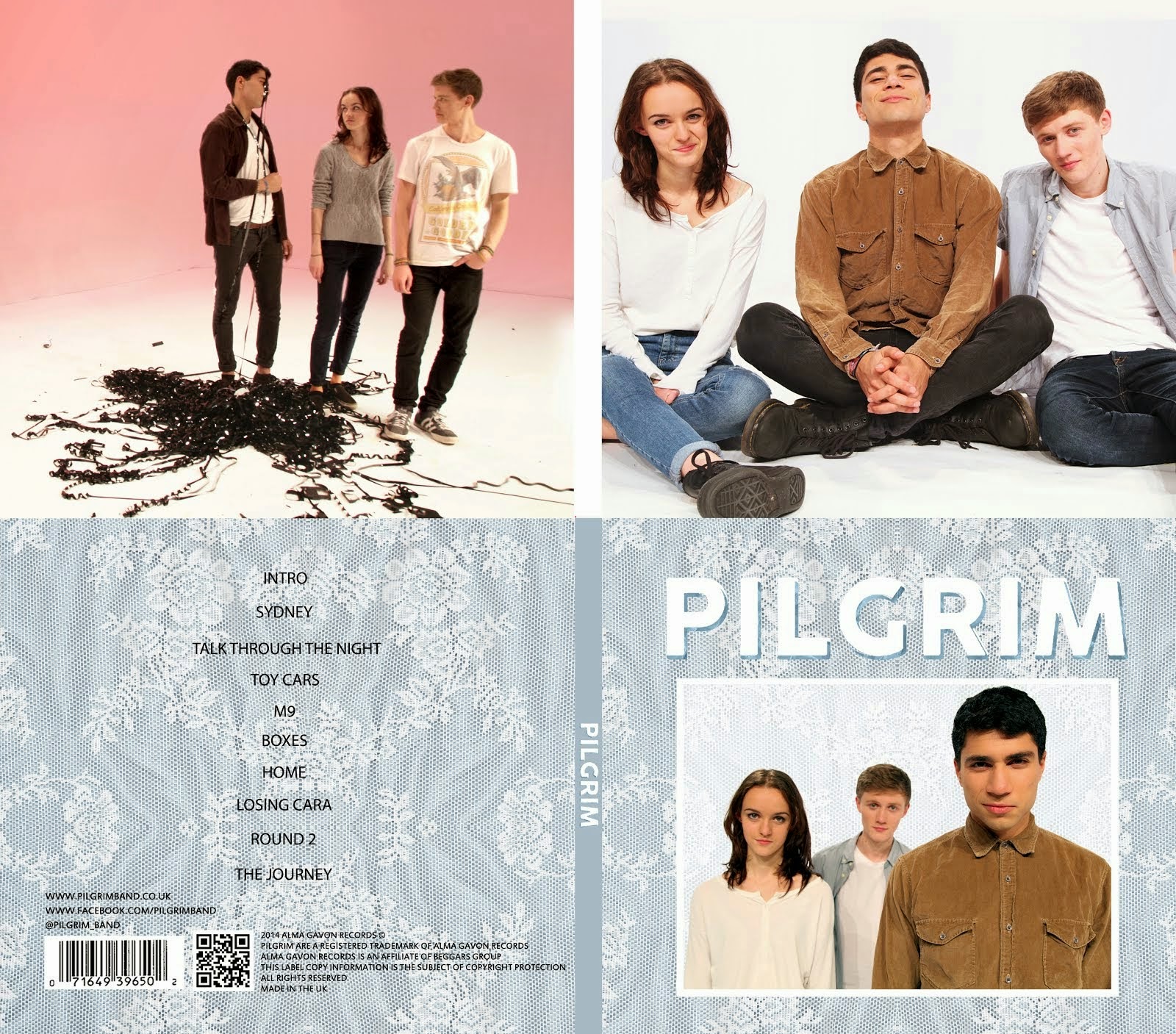
Digipak
Album Digipak // Top-left to bottom-right: inside back, inside front, back cover, front cover
Website
Click Image to open Pilgrim's website in a new tab
In order to solidify our band's identity, we created synergy between our three artefacts. This is a vital part of any marketing campaign. Richard Dyer's star theory says that creating an identity for an artist is key to success and I feel that we have effectively done this.
Band Identity
Arctic Monkeys - AM
I analysed how Arctic Monkeys promoted their latest album, AM, and how they created synergy in their marketing campaign.
Our Band Image
We created a unique image for our band by using our three artefacts to create synergy.
Words that describe our band and the themes of their music
This prezi identifies the personalities of our band members and of the band as a whole. I have also shown how these personalities are reflected in the music video.
Website:
Our website also reinforces our band's identity. For example, this Behind-the-Scenes video from the music video shoots shows the band playing around with each other and having fun. This presents them as genuinely funny and relatable people.
We also have a bio page for each band member to add depth to their personalities and make them more authentic.
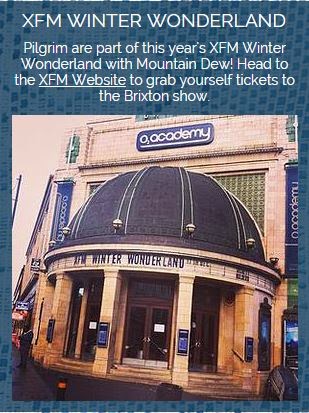
There is also symbiosis between our band and indie companies like XFM and NME on our website. We decided to have posts that involved these institutions so that our indie image would be strengthened through the association with them. This also increases the reach of our marketing campaign since we are able to target fans of the institutions that we work symbiotically with.
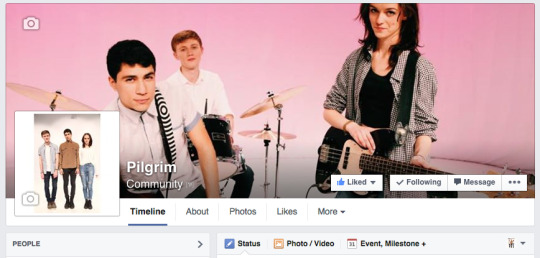
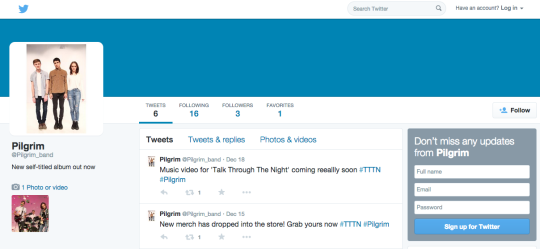
We also increased the reach of our marketing campaign by using multiple social media platforms. We took advantage of the strengths of each platform, making our Instagram page very visual and using Twitter more for short text updates. However, we did try and use all three to promote certain things such as the album. This meant we were able to appeal to different audiences depending on which platform they prefer, while still widening the reach of our album promotions through using multiple platforms.
Facebook
Instagram
Twitter
Finally, by juxtapositioning the very vintage lace texture with the modern posts and web tools combines the band's modern style with their nostalgic themes
Our Marketing Campaign
Our three artefacts work together synergistically. We achieved this through using a consistent colour scheme and texture throughout the project as well as incorporating the band's logo into our three artefacts.
Logo and Font
We used the same logo in our three artefacts. The logo is present on our album cover and on the sleeve, as well as on our website's banner, meaning it is at the top of every page. We also included it on all of our merchandise in the website's store. In our music video, the logo was placed on the bass drum so that it is present throughout the video. We also finished the video with the logo on the screen to cement the branding in the viewer's mind.
Texture
...
Colour Scheme Our Colour scheme was blue,grey, andwhite. We tried to stick to this as much as possible when creating our three artefacts to make them all work together and feel connected. As the project progressed, we started to incorporate pinkinto the colour scheme as we felt it worked well with the other shots and reflected the more feminine side of our band, appealing to female members of our target audiences.
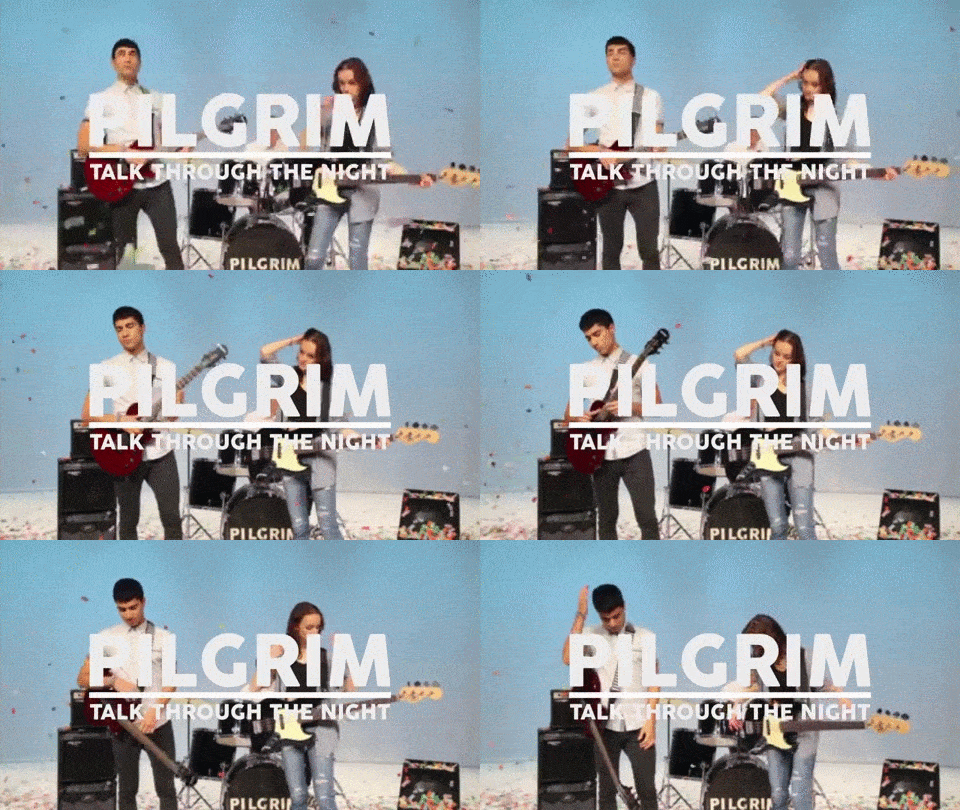
The performance shots of in our video alternate between blue and pink backgrounds. Our costumes for the performance shots are predominantly grey, white and blue to match our colour scheme. Alice is also wearing a black top which makes her stand out slightly.
Our final shot is the blue performance setup with the band's logo on the screen. This again reflects our colour scheme with the blue background, the white and grey costumes and the white text.
Our digipak also follows the colour scheme, with the outside covers consisting of blues and whites and the inside panels being predominantly pink and white.
Outside covers - predominantly blue, grey and white
Inside panels - predominantly pink and white
Finally, our website follows this same colour scheme. The blue of the background is the dominant colour and throughout the website we have used pinks, whites, greys and blues.
Our homepage - the boxes are all blue, grey and white and we have included pink images such as the tour banner and the music video thumbnail.
Our tour page is a good example of how we incorporated this colour scheme into our website. The colour palette that we used for our tour page is shown above.
Pilgrim's Website
I have explained below how we made our website interactive, as well as the learning and purchasing opportunities that we have incorporated.
We obtained feedback throughout the project on our three artefacts, using what we learned to adjust them as we developed them. We initially established our target audiences since we wanted our artefacts to appeal to them. We kept this in mind for the duration of the planning and construction stages of the project and collected feedback from people that we would actually be targeting, since their opinions matter the most.
Audience Profiles
We had three audiences that we were trying to target. The main thing that they all had in common is that they are all fans of music to some degree. We then narrowed down our primary, secondary and tertiary audiences by targeting specific age groups and looking at the kind of music that they listen to.
Primary Audience - Indie fans of all ages
...
Why we chose this as our primary audience
We decided that since our band is an indie band, it made sense to have fans of that genre as our primary target audience. We did not narrow down our primary audience by age as we wanted to appeal to as many people as possible. We also found that indie fans aren't defined as much by age as other genres like rap or pop are. For example, there are indie artists of all ages, ranging from George Ezra (21) to Dan Smith, Bastille's lead singer (28) to Beck (44) and J Mascis, the singer and lead guitarist of indie-rock band Dinosaur Jr. (49).
Music consumption
As this is quite a broad target audience, they consume music in many different ways. The younger fans consume music in more non-traditional ways such as digital downloads or streaming to mobile devices. Older audiences tend to prefer more traditional methods such as CDs or vinyl. However, there are plenty of younger fans that prefer more traditional methods and plenty of older fans that prefer digital methods of consumption.
Engagement with artists
Most indie fans go to gigs to see the artist perform and hear the music live. Fans who prefer non-traditional methods of consumption follow artists on various social media sites and enjoy engaging in discourse with other fans. Richard Dyer's star theory says that fans buy into the image of the artist or band and that interaction via social media is an important part of being a fan. David Gauntlett also talks about artist identity in the modern world and how constructing an identity is a required for success. Artists construct this image through social media sites and fans engage with them.
Secondary Audience - UK 16-24 year olds
...
Why we chose this as our secondary audience
Our secondary audience is more specific. Since Pilgrim is a British band, we targeted British people specifically. The Youtube analytics for our video show that the majority of the views are from British people.
We chose 16-24 year olds because indie music is popular among this age group. Many fans of pop music are actually indie fans without realising it. Many people who listen to artists like Katy Perry or Rihanna would not identify as an indie fan despite also listening to indie pop artists like Ed Sheeran or The 1975.
Music consumption
This audience is part of the web 2.0 generation and frequently uses technologically converged devices like smartphones of laptops. Streaming and illegal downloading is very common amongst this age group. Most 16-24 year olds are very active on social media sites and use them regularly to socialise and follow their favourite artists.
Despite the decline of CD sales (19.6% in the second half of 2014), vinyl has grown massively in popularity, fuelled by albums like AM and Lazaretto by Arctic Monkeys and Jack White respectively.
These music fans also like to meet their idols at live shows or meet-and-greets. This fanboy/fangirl culture is most common among this age group.
Tertiary Audience - Music fans of any genre/age
...
Our tertiary audience is very broad. We feel that our band has quite a broad appeal and fans of an age or genre will be able to relate to the video's universal themes of childhood and friendship to some degree or, at the very least, enjoy the song.
Appealing To Our Audience
Blumler and Katz's Uses and Gratifications theory says that people choose to consume a media text for four different reasons. We considered these four reasons when making our music video so that we would be able to effectively appeal to our target audience. Below, I have analysed a real music video using this theory and then applied it to Pilgrim. I chose this video as it is a video that influenced us in the planning process and is therefore quite relevant to our project.
Audience Feedback
Stuart Hall suggested that, as different audiences have different cultural backgrounds, they can interpret a text in different ways. As our video is quite conceptual, we have given the viewer a chance to infer their own meaning from the song. Therefore, while we have not directly chosen to amplify the meaning of the song, some audience members may deduce their own amplified meaning from the video. Getting feedback is very important because, as Stuart Hall said, everyone interprets things differently and getting the opinions of other people helped us see things that we hadn't considered.
Feedback throughout the project
Throughout the project, we collected feedback from our friends and classmates, many of whom were indie fans and, therefore, members of our primary target demographic. We asked them various things such as their opinions on various shots or on the video as a whole, as well as getting opinions on different publicity shots and aspects of the website.
Getting outside opinions on the project was really useful because we saw the artefacts differently from how others did since we were working on them so much. We found that other people often had very different opinions to us on different things and that we often found flaws that our target audience didn't even notice. For example, Mahalia thought that Alice looked very sad in the shot below. However, when we asked other people what they thought of the shot, they thought it worked well with the sequence and suited the slow part of the song.
Another shot that we were unsure about was the shot below from our first cut. Mahalia didn't like the motion of the shot and thought it was offputting but I liked it and wanted to keep it.
After asking members of our target demographic, we found that others also thought the shot didn't work, saying the motion was unnatural and distracting. We replaced it with the following shot.
When designing our album cover, we wanted to portray the band as fun and approachable. We chose the image below because we felt that it conveyed the band's playful mood well and was an interesting shot.
However, when we showed it to members of our target demographics, the most common response was that the image wasn't serious enough and that the band members weren't coming across as a band as much as just three friends. We chose a more serious picture and asked people again what they thought. The feedback was much more positive.
On our website, we have a competition page with a large image on it showing the prizes and how to win. Our initial image was received negatively when we showed it to people. They said that the 'WIN!' box in the bottom left corner was too large and that the Pilgrim logo was too small. The gif below shows the changes I made after receiving this feedback.
Feedback on the final artefacts
Music Video
I created a survey using a website called SurveyMonkey, asking for feedback on our music video. I have embedded the survey below. This website was very useful because we managed to collect lots of results from members of our different target audiences.
We managed to get responses from a range of participants. The majority of the respondents were aged 16-24 but we did also get some responses from older people. We got roughly the same number of reponses from males and females, meaning our responses weren't skewed due to gender imbalance.
I also asked people to choose which target audience demographic they fit into so that we could easily identify the kinds of responses we got from each of our target audiences. We got a good spread here too, with the majority of respondents being members of our primary target audience, (indie fans), and multiple responses from the other categories.
1. People enjoyed the video and thought it went well with the song
Participants gave very positive ratings for the video and most thought it suited the song well. Since almost everyone that took the survey was a member of one of our target demographics, this shows that we effectively appealed to them when making the video.
(note: both questions were out of 5, despite the scale going to 10)
2. The viewers understood that the video was from the indie genre
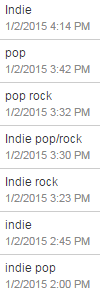
Respondents almost unanymously thought that the genre was indie or some sub-genre of the indie genre, (indie-pop was also a fairly popular response). This shows that we clearly conveyed the genre, following its conventions effectively.
(Responses to question 5)
3. We successfully conveyed the themes that we had intended it to
One of the questions asked what themes the video conveyed. Popular answers included friendship and youth. These are all themes that we intended to communicate. Having fun was another popular answer. This was not a theme that we directly tried to communicate but it is definitely strongly related to the other themes that we intended to convey. Overall, the results show that we communicated the themes of the song well.
(Responses to question 9)
4. People responded positively to the band's branding and said they would buy into them
I included two questions related to this. One asked participants if they would buy the band's music after watching the video and the other asked how much they would be willing to pay to see the band live. Over 80% of the respondents said they would either buy or consider buying Pilgrim's music and roughly 85% said they would see them live. The most popular range for this was £10 to £19. This is a fairly typical price for seeing an indie band live.
The fact that most respondents said they would at least consider buying into the band in some way shows that we created a distinct and desirable image for them.
Many repondents said they liked how colourful the video was. Some said that they liked the camerawork and said it looked quite professional. We did receive plenty of negative feedback too. Many noted the lack of narrative. We decided not to have a narrative but, since it is conventional of indie videos to have some kind of narrative, some people may have felt that it was needed.
Respondents liked the use of colour
Some people thought the video lacked a narrative
Some other opinions
Digipak and Website
Three Main Lessons Learned
We learned a lot from audience feedback that we collected throughout the project. In summary, the three most important things that I learned were:
We managed to successfully appeal to our target audiences. In particular, we appealed to 16-24 year olds as they are the most tech-savvy and they were comfortable using our website while older people thought it was too cluttered and confusing.
Different audience members interpreted our texts in different ways. As Stuart Hall said, media texts are decoded differently depending on who is interpreting the text. Throughout the project, feedback varied between people of different backgrounds and ages and we got lots of different opinions at all stages of the project. I had not anticipated how varied the opinions of our texts would be.
We successfully created artefacts that are identifiable as part of the indie genre. Across all of our feedback, one consistent opinion was that the three artefacts were distinctly indie. I think that we did a good job of making the artefacts conform to conventions of the indie genre and they all fit into the genre well. Some people did think the music video was from the pop genre. This may be due to the fact that we unintentionally drew some influence from pop music videos, where bright colours are very conventional. However, these influences didn't dominate the video and it is still distinctly indie.
We used new media technologies effectively throughout the project. These technologies enhanced our three artefacts as well as helping with communication within our group, aiding our research and making the collection of feedback much easier and more effective.
This is a list of all the technologies that we used throughout the project.
Blogger
We used blogger to post the progression of our project as we planned and developed the three artefacts. It was very useful for keeping track of what happened, as well as posting resources like pictures or ideas for the rest of the group to access.
It was a great way of presenting the evaluation because it allows you to embed web tools. This means I have been able to present everything more visually and concisely using various web tools like the one above. The HTML editor also allowed me to edit how the web tools appear and change things like their size on the page. As you can see in the picture below, I was able to change the height of the ExamTime tool above by adjusting the value for height="590" in the HTML coding.
The HTML code for the embedded Spider Diagram and the text above
Research and Planning
Social Media
Probably the most important new media technology that I used was social media. We used Facebook frequently in the research and planning stages of the project as well during the production and evaluation stages. Within our group, we communicated ideas and organised meetings. I found that Facebook was particularly suitable for us because we could use the group chat to ask questions or quickly check something while using the main wall of the group for sharing pictures and songs. The group chat was also useful because everyone in our group had a technologically converged smartphone, meaning everyone was reachable at all times.
Finding a Song
I used a variety of websites and programs to help choose our song. Initially, I looked through my iTunes library and made a playlist of possible songs. I found the 'Related Artists' feature on Spotify useful for extra ideas as it suggested plenty of artists of the same genre as the artists I was already considering. I then added all the songs to a YouTube playlist that I could access from anywhere and share with the other members of my group.
'Related Artists' feature on Spotify
Research and Inspiration
We used the internet a lot for researching various things such as other album covers or trends in the UK music charts. It was particularly useful for getting current information and real artists that we could use to inspire and shape ours. I also had access to countless images and videos that inspired me creatively and helped to shape our three final artefacts.
Creating our Steal-o-matic and Animatic
Adobe Premiere was essential for our project. As well as using it to create our final music video, we used it to create a steal-o-matic and animatic, allowing us to have a visual representation of what our video would look like and making the planning process much easier. Having this editing software readily available to use was very helpful because it really helped us visualise the video and the fact that it is fairly easy to use meant that creating the steal-o-matic and animatic wasn't a big hassle.
Buying Props
Our video relied heavily on props. We bought most of our props on amazon as well as a couple from GO International. There was plenty to choose from and we were able to find cheap options for everything on our prop list.
Production
Again, we used Facebook heavily to communicate and send files to each other. We prepared for shoots using the group chat and posted various updates and pictures on the group's wall. We also used social media to promote our band, tweeting things on a the Twitter and Instagram pages that we created.
Part of a conversation we had using the Facebook group chat
Posts in the group organising a shoot and sharing pictures for our blogs
CamStudio
This is a free piece of software that records what you do on your computer and exports it as a video file. It was advertised as a very simple program but it proved extremely impractical and didn't work well at all. The installation added unwanted programs to the computer and the initial settings didn't work at all. After a few attempts I managed to find settings that worked fairly well for the first website tour video although the frame rate was very poor. I spent roughly an hour rendering out test videos and changing settings before I achieved the quality of the other two videos. I did get the program to work in the end and as far as I am aware, there are no better alternatives that are free. However, I definitely would not recommend the program and I found it very irritating and hard to use.
The three videos that I recorded using CamStudio
Wix
We created our website using a piece of free online website-editing software called Wix. This software was great because it gave a lot of freedom to be creative with the design of the website while keeping the process as simple as possible, supplying templates and tools that we took advantage of. One problem with the software being online was that there was the possibility of the web browser crashing. This did happen to us on one occasion and we lost some work. However this was a small price to pay for the benefit being able to access the site from any computer as well as the whole thing being free.
Editing the website in Wix
Evaluation
Gifyoutube.com was a very useful website for creating visuals for my blog. It allows you to create gifs from YouTube videos. These gifs are useful for quickly showing a small section of a video that I want to talk about and they make the blog a bit more interesting. I had previously been using gifsoup before Alice showed me this website. The quality is far superior, with more frames and better image quality. There is also no watermark in the corner.
Gifmaker.me is another website for making gifs. This website allows you to make gifs from uploaded pictures as opposed to Youtube videos. This was useful for comparing different images or showing anything that wasn't on Youtube. I used it to make the prop gifs in this post, for example.
This website has lots of useful features and is easy to use. It is free to use although you are limited to only ten questions. This wasn't a big problem but I did have to leave some questions out. It did make me think more about how I worded the questions so that I could get the best feedback. The results are very visual and easy to interpret and creating the questionnaire was fairly easy. One thing that I found very useful was that, as well as getting a summary of the answers for each question, it is possible to view all the answers from one user for each question, meaning we were able to see specific answers from different audience demographics. It also allowed to ask lots of different types of questions. I was able to have some closed, multiple choice questions for specific feedback that we wanted and more open questions asking for opinions and constructive criticism. The picture to the right shows how many different kinds of questions we could use. I was very impressed with the variety that was available for free.
...
Social Media
Again, social media was key to the project at this stage. As before, we used our Facebook group to communicate and share files. More importantly, however, we used Facebook and Twitter to share our video and questionnaire. I made a post containing links to our music video and the survey and asked people to watch the video and leave feedback on the questionnaire. The other members of my group then shared this post and these posts then got shared by various friends and relatives.
On top of this, we decided to try and target specific audiences. We thought fans of Dog Is Dead, (the band who our song is actually by), would enjoy the video. We posted the video and questionnaire on their Facebook page and tweeted it to them. This got us more feedback from our primary target audience. Overall we got over 50 responses for free using SurveyMonkey and social media.
Kayvon shared the video and survey on Dog Is Dead's Facebook
We tweeted the video and survey to Dog Is Dead as Pilgrim
Overall I think I made good use of new media technologies, taking advantage of many different pieces of hardware and software throughout the project. We had access to technologically converged devices such as smartphones and computers that allowed us to communicate and research effectively and the proliferation of technologies in recent years has allowed us to create three artefacts that would not have been possible for us to make 10 years ago, especially in the short time frame that we managed to create them in.